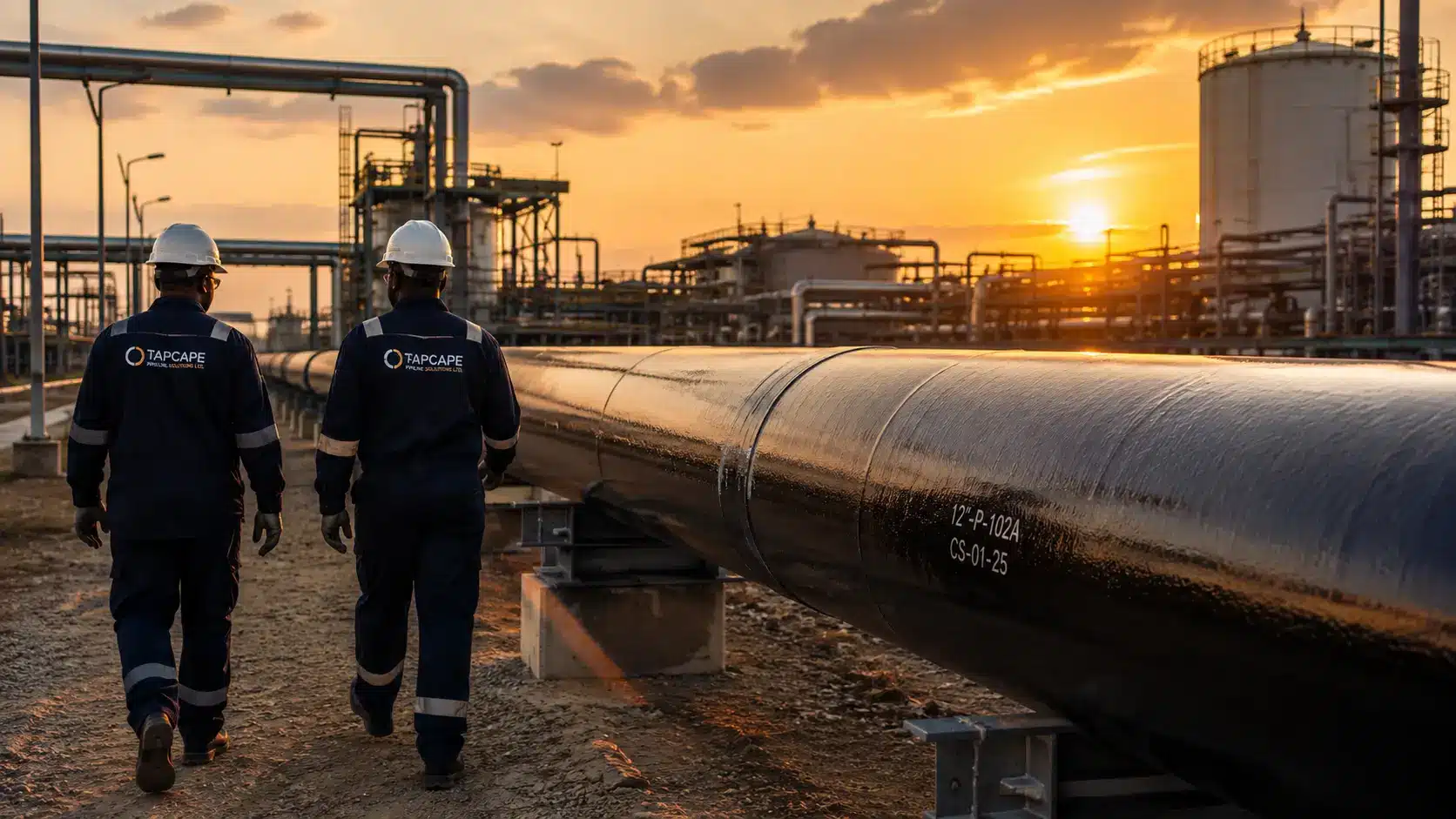
The environmental stressors present in the Nigerian oil and gas sector—ranging from high ambient humidity to saline exposure in coastal operations—force aggressive degradation on unprotected steel infrastructure. Without engineered intervention, localized pitting and wall thinning compromise pressure boundaries, leading to inevitable containment failure.
Tapcape approaches corrosion management not as simple maintenance, but as a critical structural intervention. Halting degradation requires absolute adherence to NACE standards during both surface preparation and coating application.
The Foundation: Surface Preparation
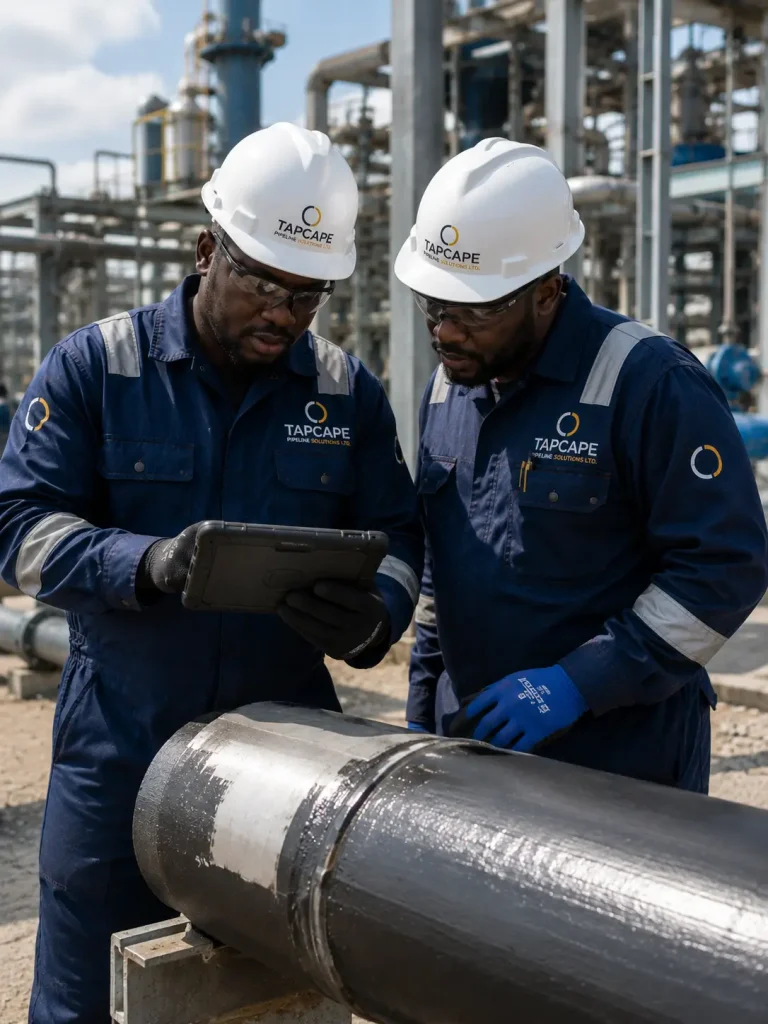
Applying high-performance coatings over oxidized or poorly profiled steel guarantees premature failure. The longevity of any epoxy or polyurethane system relies entirely on mechanical adhesion.
Before any coating is mixed, our corrosion teams execute controlled abrasive grit blasting. We mandate a minimum cleanliness standard of SA 2.5 (Near White Metal Blast) for critical infrastructure. This process removes all mill scale, rust, and old coatings, exposing a clean substrate. Just as importantly, it establishes a specific angular surface profile (measured in microns) that allows the primer to lock into the steel structure.
Application of High-Build Epoxies
For active pipelines and exposed structural steel, we specify and apply high-build epoxy systems. These coatings provide a dense, impermeable barrier that insulates the steel from corrosive electrolytes.
Our application workflow is heavily monitored:
- Environmental Control: We verify that steel temperature remains safely above the dew point to prevent micro-condensation prior to application.
- Airless Spray Deployment: Coatings are applied using high-pressure airless systems to ensure uniform coverage without the introduction of trapped air.
- Wet and Dry Film Verification: Technicians continuously monitor Wet Film Thickness (WFT) during application. Upon curing, final Dry Film Thickness (DFT) is mapped and recorded against client specifications.
Final Verification
Visual inspection is insufficient for asset preservation. We utilize holiday detection (pinhole testing) and pull-off adhesion tests to verify that the protective barrier is continuous and structurally sound. Proper corrosion management extends the lifecycle of capital assets and defers the massive costs associated with sectional pipeline replacement.
Schedule a Corrosion Audit: Protect your facility infrastructure before degradation impacts production. Contact our field operations team via the Contact Us page.